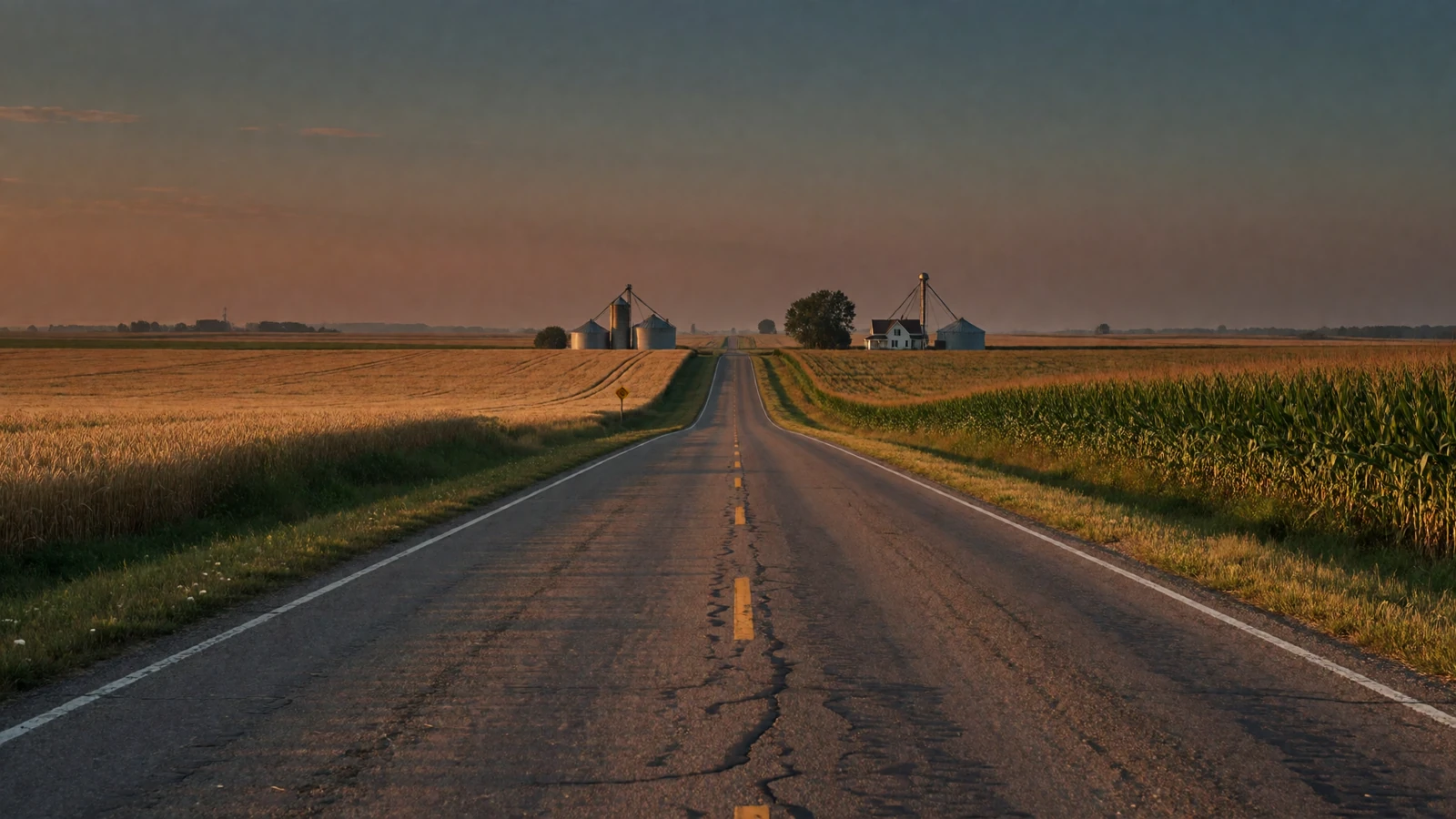
- About 14 million U.S. couples are in a long-distance relationship, with an average distance of 125 miles and roughly 1.5 visits a month (CSLDDR).
- Success rates for long-distance couples (often cited near 58%) are comparable to geographically close couples - distance alone does not raise the risk of breakup.
- Jiang & Hancock (2013) found long-distance partners often report higher intimacy and deeper self-disclosure than nearby couples.
- Response speed in texting predicts satisfaction better than video-call frequency (Holtzman et al., 2021).
- About a third of couples break up within three months of finally closing the distance - plan reunions with realistic expectations.
Do long-distance rural relationships actually work?
Yes - long-distance rural relationships work about as well as any other, and the data is surprisingly reassuring. Guldner & Swensen (1995) compared 194 people in long-distance relationships with 190 in geographically close ones and found no significant difference in satisfaction, intimacy, trust, or commitment. In other words, the miles between two farms are not the problem. Weak communication and the absence of a shared future plan are.
For rural singles, this matters enormously. In small communities, the nearby dating pool is tiny, so meeting someone one or two counties over is the norm, not the exception. Searching for a partner in a neighboring state through our local state hubs does not lower your odds - it simply widens the pool of people who share your values. The rest of this article walks through what the research says and how to put it to work.
The Data on Long-Distance Love
Long-distance relationships are far more common than most people assume. Verified figures paint a clear picture: distance is a normal feature of modern dating, and rural couples are in good company when they date across a map rather than across a town.
Why the numbers should reassure you
Roughly 3.5 million married U.S. couples live apart for reasons other than divorce, and that figure has doubled since 1990 (IFS/Census Bureau). Distance in a relationship is not a red flag - it is an increasingly ordinary chapter that millions of couples navigate successfully.
Intimacy in LDRs: The Jiang & Hancock Study
Distance can actually deepen intimacy. In a widely cited study published in the Journal of Communication (2013), Crystal Jiang and Jeffrey Hancock found that long-distance partners reported higher levels of intimacy and more meaningful self-disclosure than geographically close couples. The mechanism they identified was "behavioral adaptation" - couples compensate for missing physical presence with deeper, more intentional communication.
Here's where it gets interesting: the effect was strongest for couples who used several channels of contact. Partners who mixed texting, phone calls, video, and even the occasional letter reported the highest intimacy of all. The takeaway is not about one perfect app or tool - it is about variety and effort. The same research logic underpins how our messaging and connection features are designed: quality and range of communication matter more than any single medium.
Text Messages as a Predictor of Satisfaction
How quickly you reply may matter more than how you call. Holtzman, Kushlev, Wozny & Godard (2021) studied 647 participants and found that the frequency and speed of text responses significantly predicted relationship satisfaction for long-distance couples - but not for nearby couples. Strikingly, video-call frequency was not significantly linked to satisfaction in either group.

What does this mean in practice? Responsiveness beats the medium. A fast "thinking of you" during a break from chores does more for a long-distance rural couple than a scheduled weekly video call. It is exactly why low-effort, high-frequency features like flirts and quick messages help shy or busy farmers stay connected - a small tap says "I'm here" when there is no time to type a paragraph.
The Reunion Paradox: When Distance Closes
Counterintuitively, the riskiest moment is often reunion, not separation. Stafford & Merolla (2007) found that long-distance relationships are actually more stable than close ones while partners are apart - but about one-third of couples break up within three months of finally moving to the same place. The culprit is idealization: absence lets partners imagine a flawless version of each other that daily life can't sustain.
But there's a catch you can plan for. The couples who reunited successfully shared three traits: moderate (not extreme) idealization, more frequent visits, and shorter gaps between those visits. Regular in-person time keeps expectations grounded. If you set a comfortable search radius across nearby states and actually make the drive on a routine basis, you get to know the real person - not the fantasy - long before you ever close the distance for good.
Practical Tips for Rural LDRs
The research points to six strategies that keep long-distance rural couples steady. Think of them as a route that runs from first message to shared driveway - each step reducing the friction of two people living on different maps.
- Prioritize quality over quantity. A few meaningful conversations beat constant shallow check-ins (Holtzman, 2021).
- Use multiple channels. Mix texts, calls, video, and voice notes - variety builds intimacy (Jiang & Hancock, 2013).
- Set realistic expectations before reuniting. Talk about daily habits and quirks so the real person isn't a surprise (Stafford & Merolla, 2007).
- Visit regularly and do ordinary things. Grocery runs and chores together matter as much as special dates.
- Reduce uncertainty with honest talks. Direct conversations about the relationship lower anxiety and jealousy (Dainton & Aylor, 2001).
- Agree on an end date for the distance. A defined finish line is one of the most stable predictors of long-distance success.
The bottom line
Distance is a normal part of rural dating, and the data says it does not decide the outcome - communication and a shared plan do. Time the miles well, and the drive across county lines becomes part of your story instead of an obstacle to it.
Want to go deeper? Read our seasonal guide on how to date a farmer, learn why winter is the road-trip season for rural couples, or start browsing profiles in your region.